
Türkiye Fuels Pricing
- How are gasoline and diesel prices determined in Türkiye? 'Energy news From Türkiye'
- Murat Lecompte
- Energy Analyst
Türkiye Fuels Pricing
The motor fuel pricing method in Türkiye has been established by the Petroleum Market Law since 2005. Under this law and related regulations, prices are determined based on the formation of the nearest global free market price.
The closest free-market pricing system is the Mediterranean fuels market in Genoa, Italy. Refineries use the prices determined in this market as benchmarks. Each day, the CIF MED price published by Platts is used as the basis for fuel pricing. CIF MED refers to the delivery price that includes Cost, Insurance, and Freight.
There is an important distinction here. Generally, many people assume that “gasoline or diesel prices will increase by 10% if the Brent crude price increases by 10%. " However, the basis is not the Brent crude price but rather the international market price of gasoline and diesel. Refineries in Türkiye do not set their prices based on the cost of crude oil.
Therefore, it is not possible to predict the refinery price based solely on the Brent crude price. There is a connection, but it’s not a perfect one-to-one correlation.
Refiners in Türkiye use Platts’ data to set prices. They consider the CIF MED (Genoa) USD/ton price and convert it into Turkish Lira (TL/ton) using the Central Bank exchange rate.
The TL/ton price is then converted into liters to establish the pump pricing.
Special Consumption Tax (SCT) and the EMRA (Energy Market Regulatory Authority) fee share are added to this. Again, there is a key difference here. SCT in motor fuels is not a ratio; it is a fixed amount. For example, SCT is not “35% of the pump price." It is a standard figure. Currently, it is 14.82 TL per liter of gasoline and 13.90 TL per liter of diesel.
After the SCT, VAT (value-added tax) is added, which results in the refinery exit price. This is the price of 1 liter of product at the refinery gate. The fuel's final price includes the refinery exit price, along with the distribution company's margin and the dealer margin.
At the same time, additional delivery and storage costs are incurred, especially if the delivery point is far from the refinery. That’s why fuel prices are higher in some provinces of Türkiye compared to others.
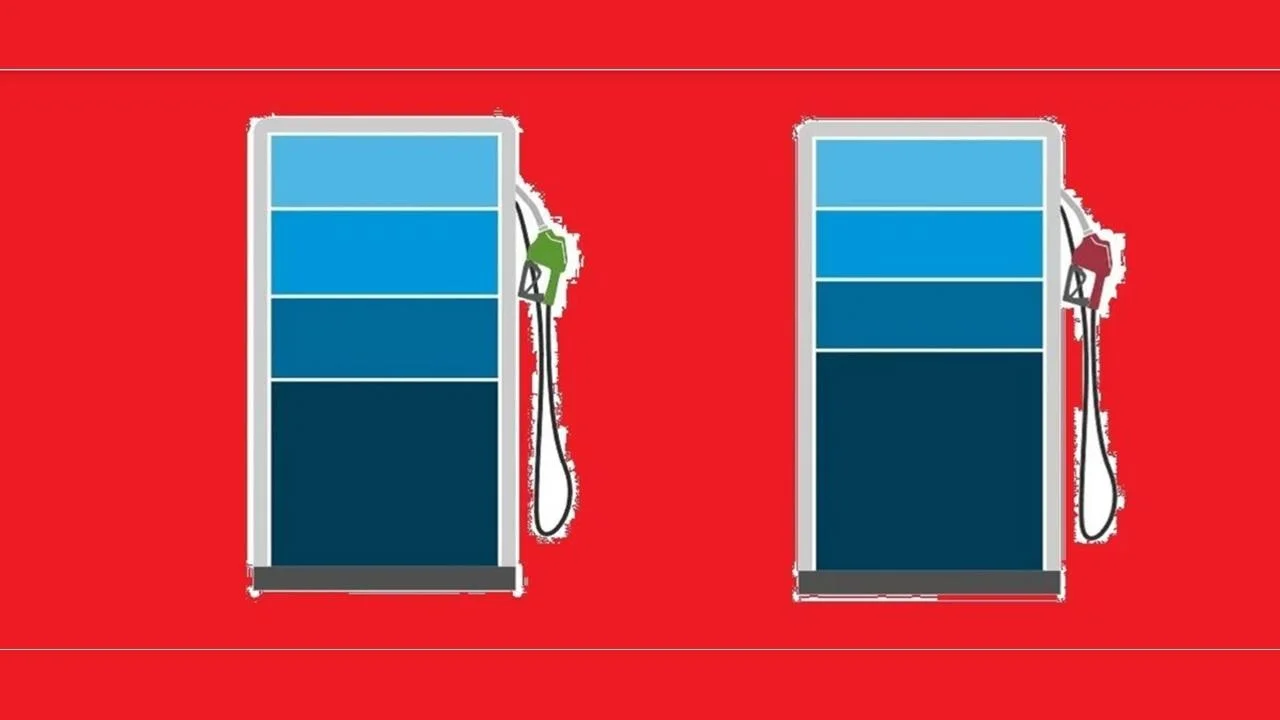
To summarize: The price formula for motor fuels includes the refinery price, SCT, EMRA fee, distribution margin, dealer margin, delivery costs/storage, and VAT. The refinery price reflects an international market-based price.
These days, we hear a lot about the “sliding scale” system. This system involves the state lowering its share of tax revenue to protect consumers during rapid price jumps. When the sliding scale is used, the state forgoes part of its SCT tax, collecting less SCT, which leads to a more tolerable price increase at the pump.
So, how does the rise in Brent crude prices affect pump prices? It’s not a one-to-one relationship. While petroleum products are priced based on changes in crude prices, each product’s price is usually set separately through a supply-and-demand market process. The key factor is the final product price established in the market, not the increase in Brent crude itself.



energy news from Türkiye - enerji ekonomisi





Yorumlar
Kalan Karakter: